
Development
1970's
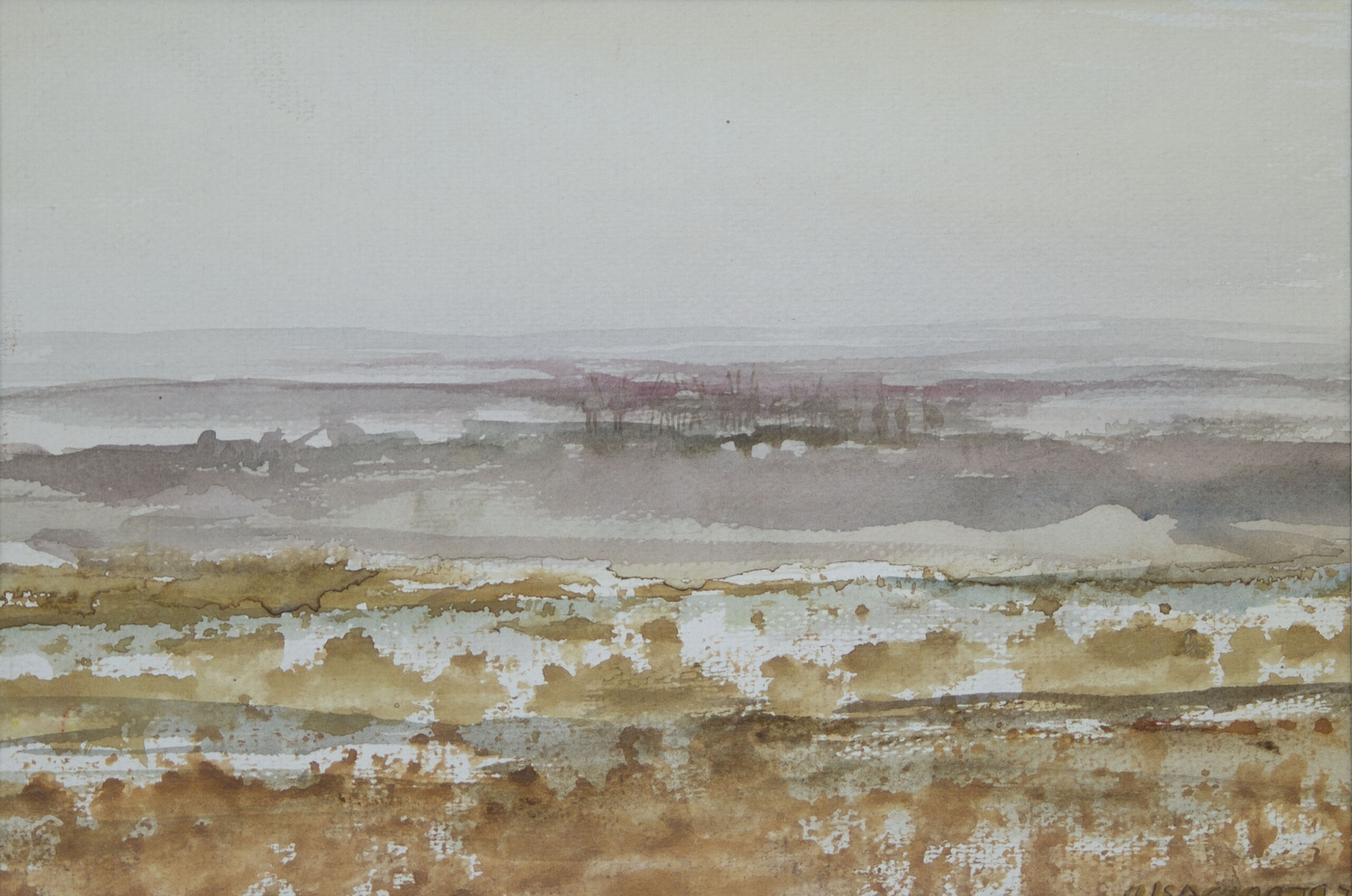
During 1970 I decided to paint full time. The early 1970s was mainly a period of experimental work. It was a search for my own style. During that time, a new medium – polyester resin started to interest me. The resin is mixed with a color pigment applied to glass with clay as outlines. This gives the effect of stained glass. The medium required quick skill because it solidified quickly. This skill later influenced my use of watercolor for the better. Because of the unhealthy influence of the medium on our family, I abandoned it.
Adolph Jentsch was a German-born Namibian artist who caught my attention in the way he used brush strokes to capture the vastness of the landscape which reminded me of my our regular visits to the Northern Cape Province as a child. The vastness of the country side at Campbell made a lasting impression on me. The work of Adolf inspired me to capture landscapes in the same manner.
1976/1977
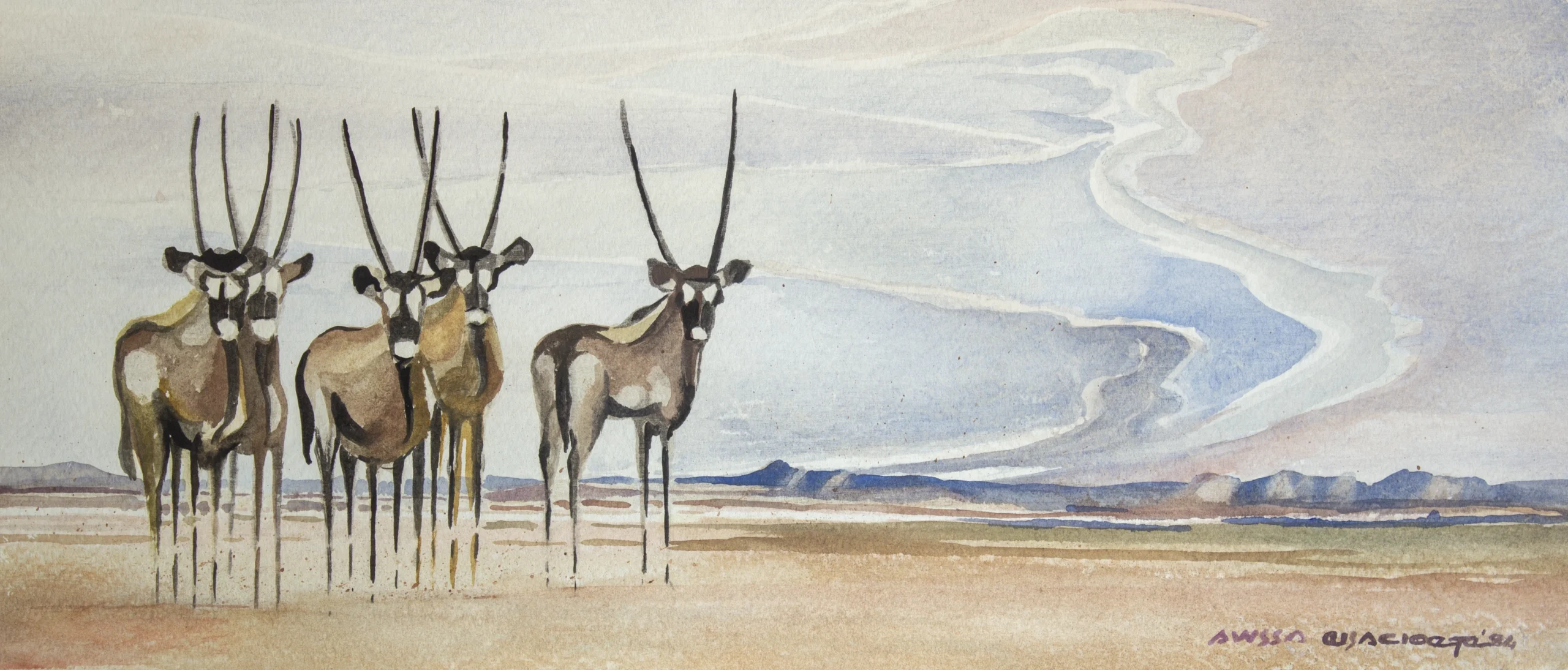
I once attended an exhibition of Gordon Vorster. Gordon’s use of line as well as the simplicity in his landscapes impressed me. It reminded me of one of my most favourite art movements, the impressionists, because of the few lines they used to depict a subject. This, in combination with the impressionists, paved the way for my technique when painting buck and wildebees in my earlier work around 1976/77.
1980's
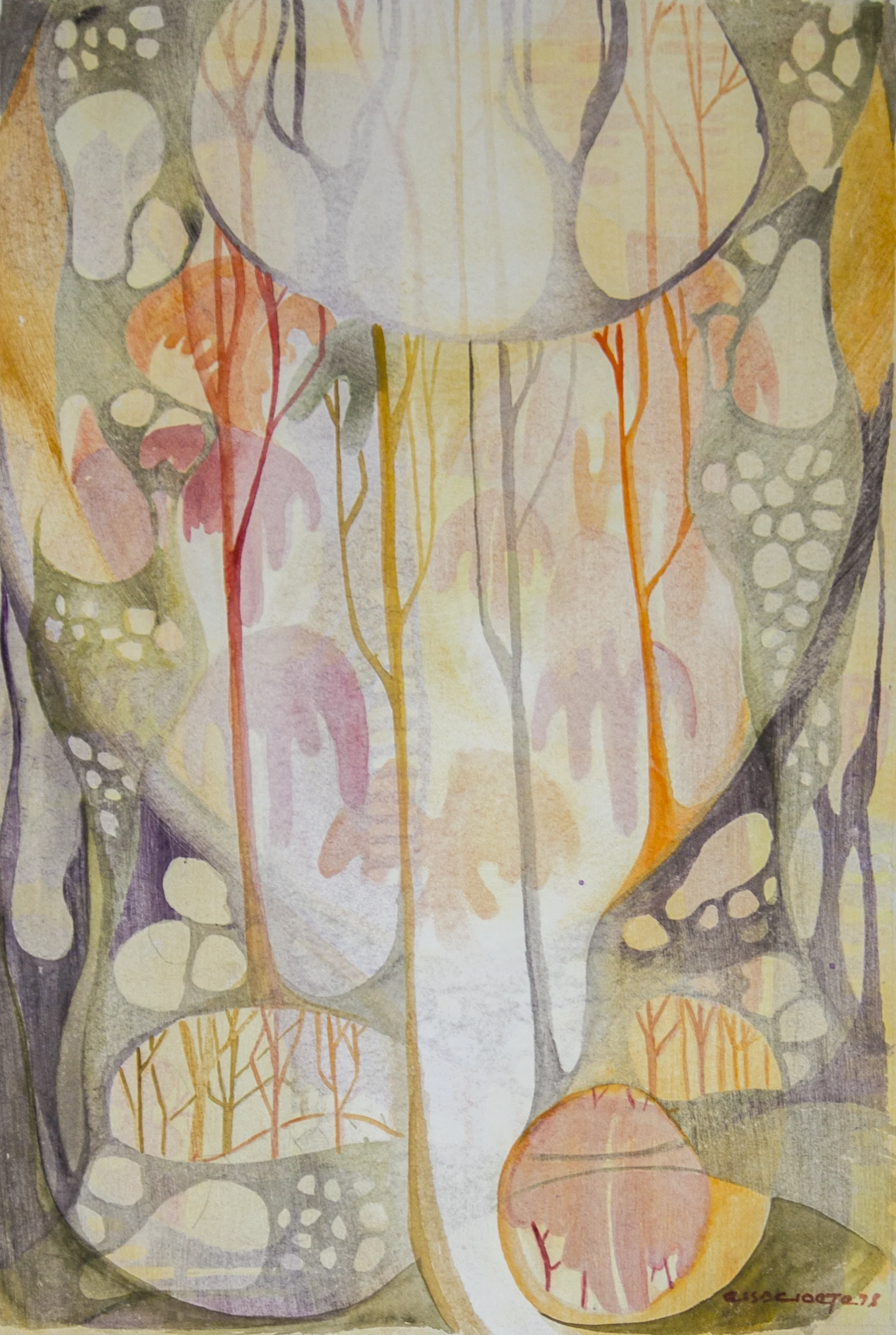
During 1978 I started planning an exhibition with a Genesis 1 as the theme. As a young artist, I had to create work that was unique in orderto take my place among the great artists. My father bought me a microscope. Plants, seeds, fruits, vegetables etc. were viewed. The many little cells and moving shapes fascinated me. I incorporated these objects and subjects- hidden to thenaked eye – in the form of circles and different shapes in my work. These elements became a trademark. It embodies life in my work. The circles – symbolising life. Strokes of light (dry technique) reflects my faith in Jesus Christ of Nazareth, and symbolic of eternal life. The exhibition was very successful.
Using the microscope stimulated my underlying desire to design. Topics in my paintings were presented with strong design principles. Line and color were used more strongly. Anna Vorster, a very well-known and respected South African artist, played a part in this. Her use of line and color application on flat surfaces, especially in landscapes, inspired me. In 1981, a full-fledged one-man exhibition was held by the Pretoria Art Association in the Volkskas building, 38th floor.
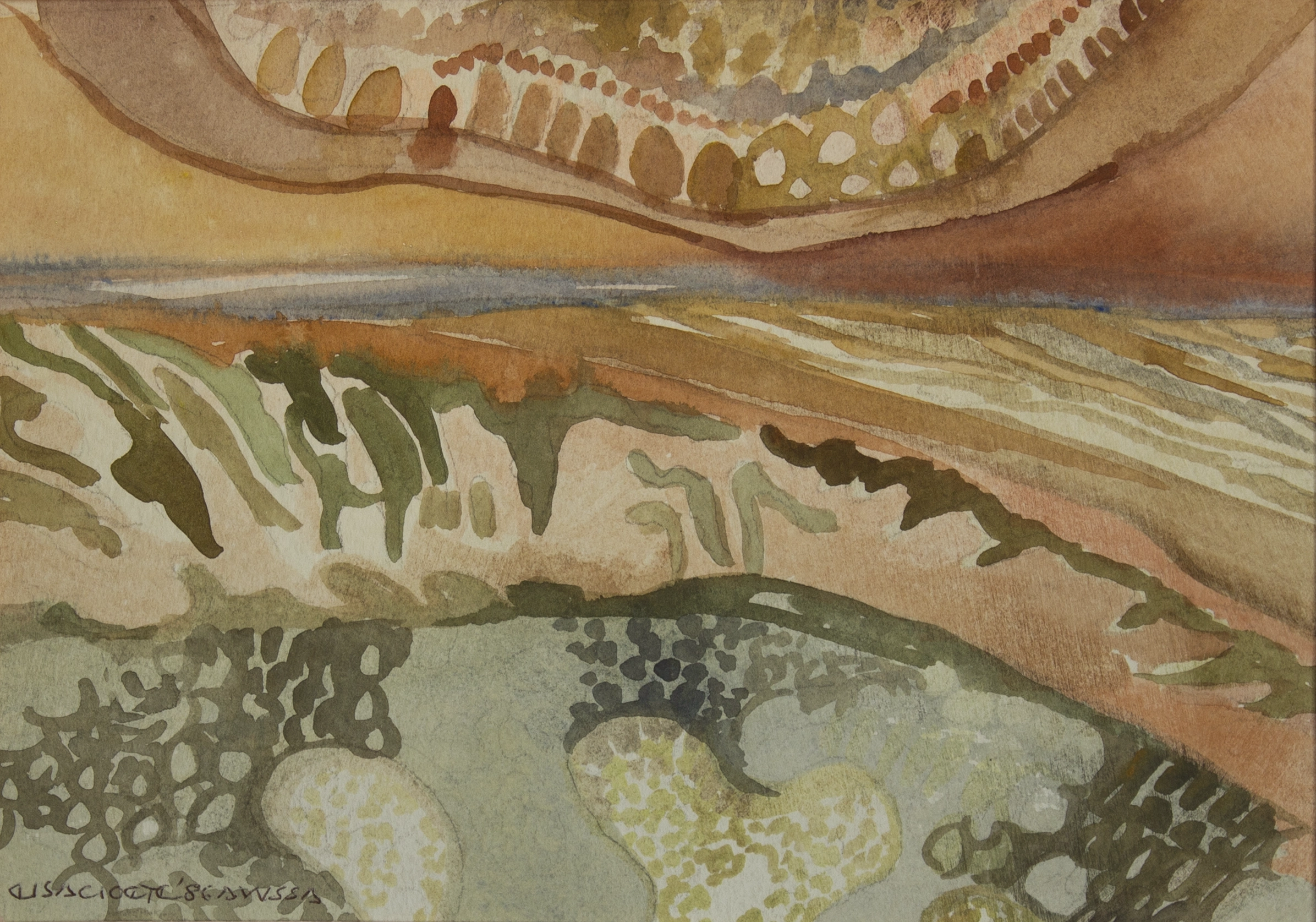
Many art critics made the remark that some of my work, mainly the landscapes during the 80’s, reminded them of the work of Anna Vorster. Voster, a South African artist, was recognized by the use of her line work to create shapes and forms. Her use of colour, when painting flat surfaces, had a design feel to it. So it happened that Anna had to write a review for a morning newspaper on my exhibition. I was terrified thinking that this well-known artist had to write about my work! As you can imagine my thoughts as a young upcoming artist was running wild. To my relieve she wrote a very positive and favourable article. She described my work as Art Nouveau because of the fullness.
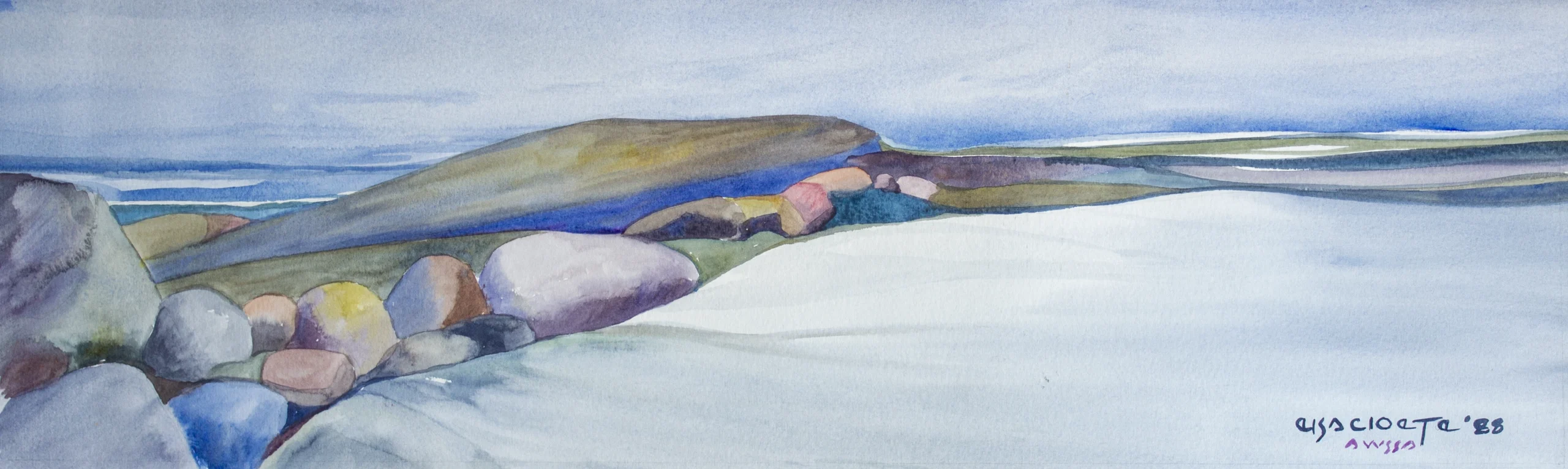
As a fairly new member of the WSSA, I was busy with a painting that I needed to submit for an exhibition arranged by the Watercolour Society of South Africa. This was in the early 1980’s. An interesting thing happened… The painting was nearly done when I made a mistake. With no time to start over I had to make a plan to rectify this. I cut out the wrong piece then I took another piece of watercolour paper, painted it and pasted it over the gap. I submitted the painting for approval.
The work was accepted and because of this the Watercolour Society decided to adapt their rules to include the use collage, with the condition that it must be the artists own original work and in watercolour. (The WSSA had a rule that only traditional watercolour paintings was accepted. Traditional in the sense of watercolour on one piece of flat paper as we know it.)
2011
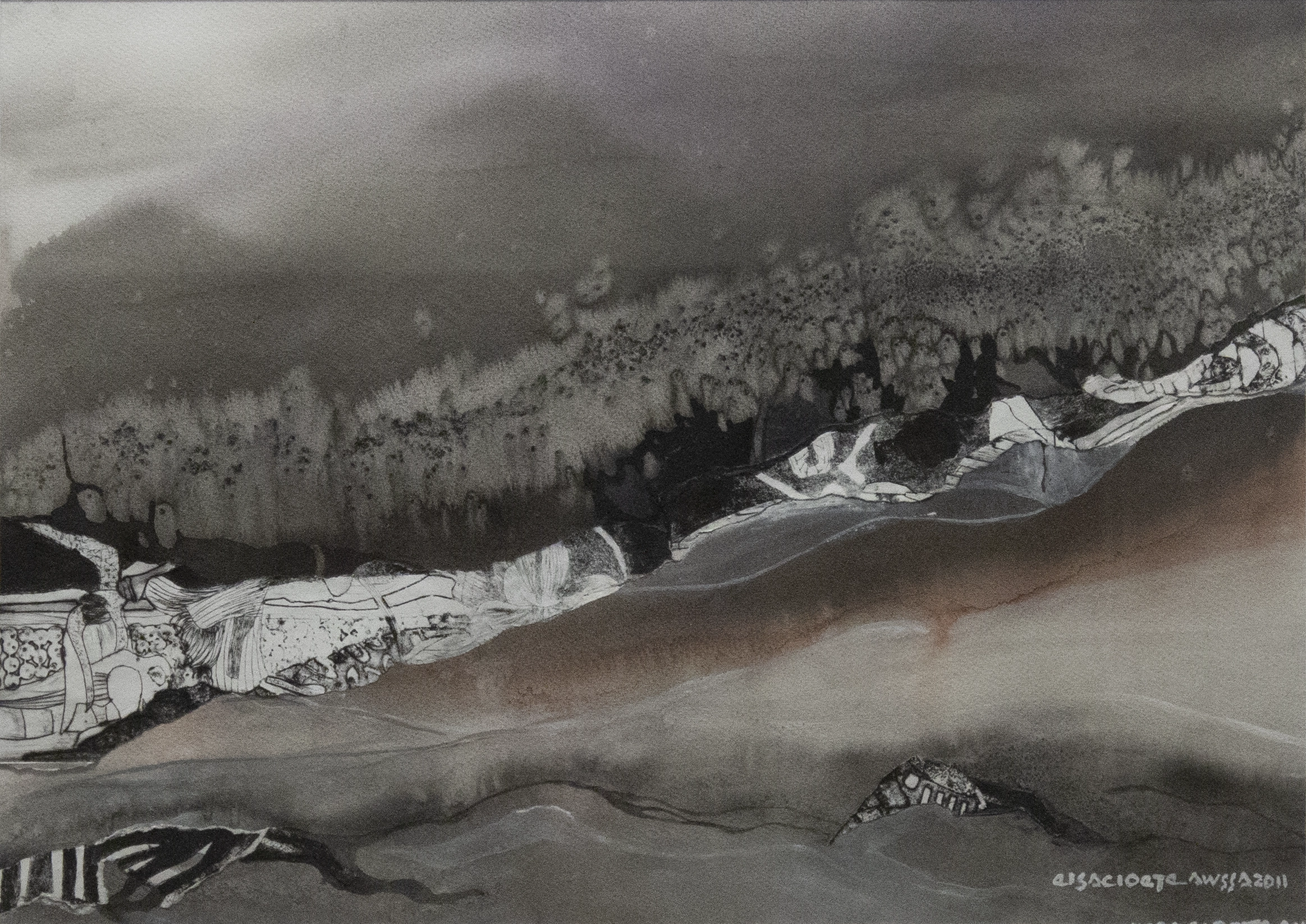 It was always very important for me to keep my style interesting . . . My last work shows a more fluent application of paint, also known as a wet technique. Subjects became more simplistic. I started use small fragments of paper to form part of the composition. A process called paper collage.
Paper collage is a very old art form that many artists used, for example Pablo Picasso, David Hockney and many more.
When I look back on my work I can say with confidence that I have succeeded in developing my own style. I believe it makes me an outstanding artist who contributed in a unique way to mastering watercolour.
01
70’s
During 1970 I decided to paint full time. The early 1970s was mainly a period of experimental work. It was a search for my own style. During that time, a new medium – polyester resin started to interest me. The resin is mixed with a color pigment applied to glass with clay as outlines. This gives the effect of stained glass. The medium required quick skill because it solidified quickly. This skill later influenced my use of watercolor for the better. Because of the unhealthy influence of the medium on our family, I abandoned it.
Adolph Jentsch was a German-born Namibian artist who caught my attention in the way he used brush strokes to capture the vastness of the landscape which reminded me of my our regular visits to the Northern Cape Province as a child. The vastness of the country side at Campbell made a lasting impression on me. The work of Adolf inspired me to capture landscapes in the same manner.
02
1976/1977
I once attended an exhibition of Gordon Vorster. Gordon’s use of line as well as the simplicity in his landscapes impressed me. It reminded me of one of my most favourite art movements, the impressionists, because of the few lines they used to depict a subject. This, in combination with the impressionists, paved the way for my technique when painting buck and wildebees in my earlier work around 1976/77.
03
80’s
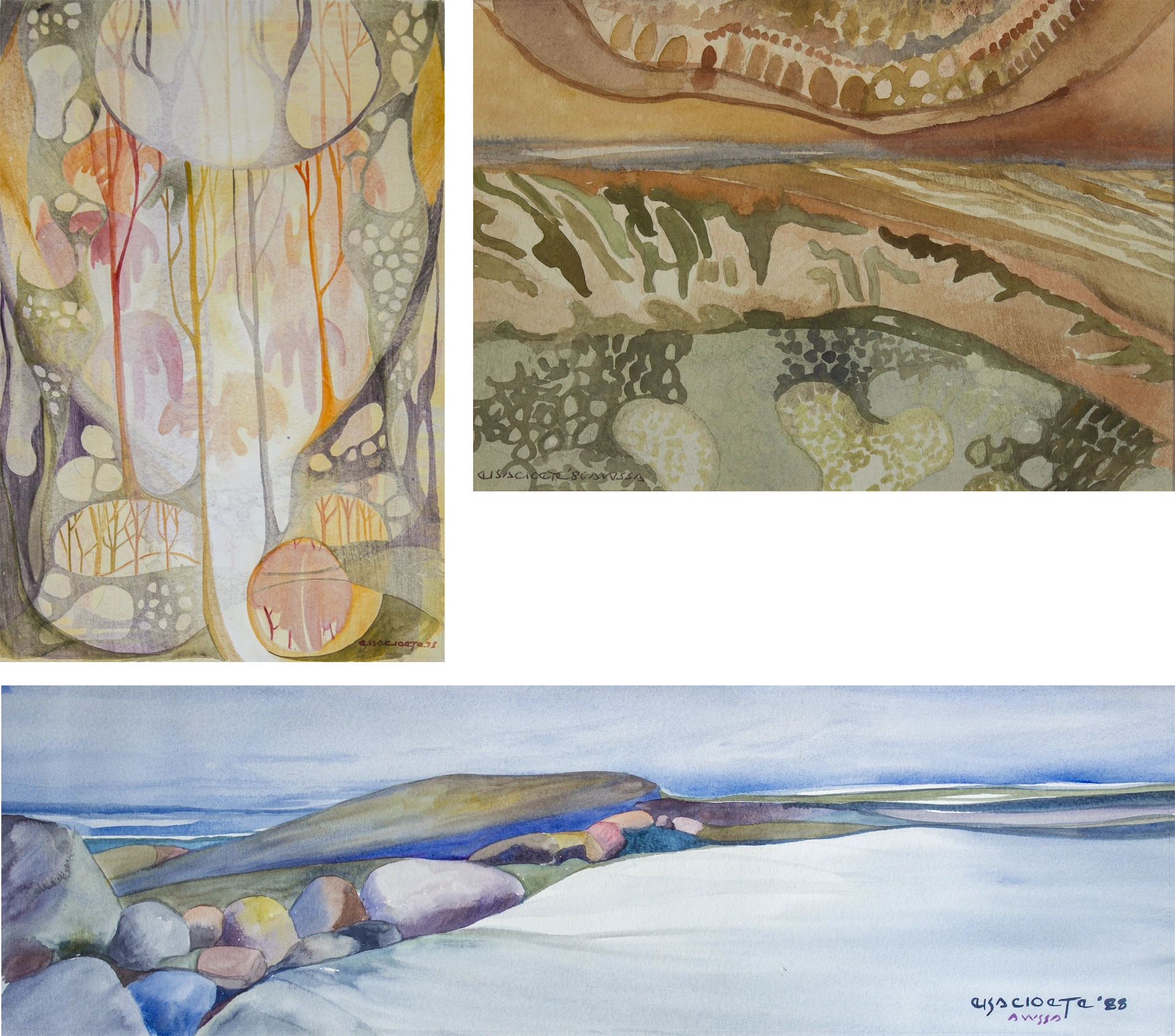
During 1978 I started planning an exhibition with a Genesis 1 as the theme. As a young artist, I had to create work that was unique in order to take my place among the great artists. My father bought me a microscope. Plants, seeds, fruits, vegetables etc. were viewed. The many little cells and moving shapes fascinated me. I incorporated these objects and subjects- hidden to the naked eye – in the form of circles and different shapes in my work. These elements became a trademark. It embodies life in my work. The circles – symbolising life. Strokes of light (dry technique) reflects my faith in Jesus Christ of Nazareth, and symbolic of eternal life. The exhibition was very successful.
Using the microscope stimulated my underlying desire to design. Topics in my paintings were presented with strong design principles. Line and color were used more strongly. Anna Vorster, a very well-known and respected South African artist, played a part in this. Her use of line and color application on flat surfaces, especially in landscapes, inspired me. In 1981, a full-fledged one-man exhibition was held by the Pretoria Art Association in the Volkskas building, 38th floor.
Many art critics made the remark that some of my work, mainly the landscapes during the 80’s, reminded them of the work of Anna Vorster. Voster, a South African artist, was recognized by the use of her line work to create shapes and forms. Her use of colour, when painting flat surfaces, had a design feel to it. So it happened that Anna had to write a review for a morning newspaper on my exhibition. I was terrified thinking that this well-known artist had to write about my work! As you can imagine my thoughts as a young upcoming artist was running wild. To my relieve she wrote a very positive and favourable article. She described my work as Art Nouveau because of the fullness.
As a fairly new member of the WSSA, I was busy with a painting that I needed to submit for an exhibition arranged by the Watercolour Society of South Africa. This was in the early 1980’s. An interesting thing happened… The painting was nearly done when I made a mistake. With no time to start over I had to make a plan to rectify this. I cut out the wrong piece then I took another piece of watercolour paper, painted it and pasted it over the gap. I submitted the painting for approval.
The work was accepted and because of this the Watercolour Society decided to adapt their rules to include the use collage, with the condition that it must be the artists own original work and in watercolour. (The WSSA had a rule that only traditional watercolour paintings was accepted. Traditional in the sense of watercolour on one piece of flat paper as we know it.)
04
2011
It was always very important for me to keep my style interesting . . . My last work shows a more fluent application of paint, also known as a wet technique. Subjects became more simplistic. I started use small fragments of paper to form part of the composition. A process called paper collage.
Paper collage is a very old art form that many artists used, for example Pablo Picasso, David Hockney and many more.
When I look back on my work I can say with confidence that I have succeeded in developing my own style. I believe it makes me an outstanding artist who contributed in a unique way to mastering watercolour.